

By Meshi Taka CEng FICE – Project Lead PGN
On Sunday 23 June 2024, I took a moment to soak in INWED 2024.
Right in the middle of the shop floor at Newcastle’s Discovery Museum my gaze fell on children’s books, on women trailblazers – Ada Lovelace, Amelia Earhart and Marie Curie, to name a few!

Two decades of working in the engineering sector behind me and I found myself pausing for a moment. Although I have encountered some of these books before, there was a certain poignancy in that moment.
International Women In Engineering Day (INWED)
What began as a national campaign introduced by the Women’s Engineering Society (WES) in 2014, gained UNESCO patronage in 2016 and an international platform to celebrate and encourage women to pursue engineering.
This year’s theme #EnhancedByEngineering reminded me of historical events that gave rise WES. The invaluable contributions of women to engineering and manufacturing during the war but also what followed afterwards; when these same women were expected to just go home once the men had returned from war.
A Call to Action: First World War
During the First World War, women played a crucial role in engineering and manufacturing. With many men enlisted in the military, women stepped in to work in munitions factories, producing ammunition, weaponry, and other supplies needed for the war effort. Their contributions to engineering and manufacturing were significant, and their efforts were essential in supporting the war industry during this time.
What Happened Next
It is 1919, post-war, and with the return of men from the frontlines, the women who had taken on the task of keeping industry running were anticipated to revert to their domestic responsibilities, whereas men were to go back to their roles in the workplace.
The WES Legacy: Trailblazers
WES was founded by a remarkable group of women engineers in the United Kingdom. These pioneering women who had also been involved in engineering work during the First World War, recognized the need for a professional organization to support and promote women in engineering.
History of the Women’s Engineering Society (theiet.org)
It has since played a vital role in advocating for gender equality in the field of engineering and continues to inspire and support women pursuing careers in this industry.
Women’s Engineering Society (wes.org.uk)
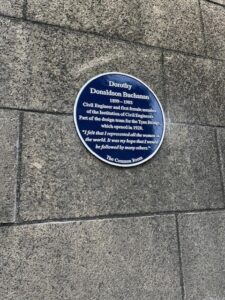
Dorothy Buchanan, the first female member of the Institution of Civil Engineers (ICE), is frequently quoted to have said
“I felt I represented all the women in the world. It was my hope that I would be followed by many others”
Dorothy Donaldson Buchanan | Institution of Civil Engineers (ICE)
Dorothy was also WES student member whilst studying at the University of Edinburgh.
How it’s Going
Today, women constitute 15.7% of the engineering workforce, with an increasing number choosing to pursue careers in STEM.
However in May 2024, Engineering UK reported a decline from 16.5% in 2022; attributed to women leaving the industry, especially within the 35-44 age bracket.
While more and more women are entering the engineering field, they are also leaving and not coming back further the line and well before the retirement stage.
The Growing Skills Gap
Engineering is evolving, it needs to in order to tackle the complex changes facing our environment and us with it.
According to the Institution of Engineering and Technology (IET) skills survey:
- 49% of engineering companies struggle with a lack of skills available in the market, and 45% face skills gaps within their internal workforce.
- 71% of internal skills gaps are related to engineering or technical skills.
“(96%) engineering employers who had identified a skills shortage within general applicants say that this skills deficit impacts their business in some way. ” – Engineering UK
We require more talent and skills than ever to join forces in addressing global environmental and sustainability challenges..
Engineering is multidisciplinary, it needs creativity and collaboration.
All Hands on Deck
“Empowered by Engineering” highlights the profound influence engineering has on shaping our world and the significant role that women play.
This time, instead of sending women home as was done after the war; we should cultivate and retain a diverse and skilled workforce to tackle the complex challenges facing our world. A timely reminder on the importance of creating more inclusive spaces.
Engineering shapes the world around us and everyone deserves a chance to influence it.
Thanks for reading.
“This project is funded by Defra as part of the £200 million Flood and Coastal Innovation Programmes which is managed by the Environment Agency. The programmes will drive innovation in flood and coastal resilience and adaptation to a changing climate.”


